The science
A catechol gives up two electrons. That is the whole idea.
Levodopa is electroactive. It can be measured directly, without an enzyme, and that single fact is what makes a cheap, shelf-stable, disposable strip possible.
01 · The same idea, three ways
The same idea, three ways
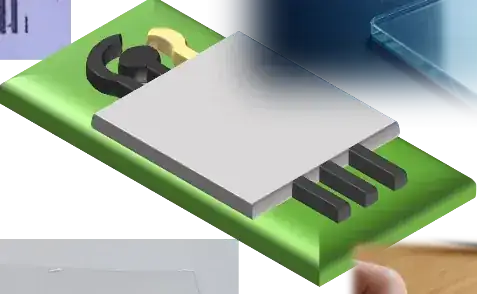
Levodopa is a catechol, a molecule that gives up two electrons readily. MONOTECT is designed to exploit this directly: when capillary blood on a three-electrode strip and a controlled voltage sweep is applied, levodopa oxidises at a characteristic potential, and the resulting current scales with its concentration.
02 · Why timing is everything
The window narrows. The dose does not.
Early in the disease, surviving dopaminergic terminals buffer levodopa and smooth out the swings in blood concentration. As they degenerate, that buffer goes, and the patient's motor state begins to track plasma concentration directly.
Below the window, symptoms return. Above it, involuntary movements appear. And the band between the two gets narrower every year, while the dosing schedule stays a fixed number of tablets at fixed times.
Shown: a fixed schedule, with concentration crossing out of the therapeutic band in both directions.
Time in band 48%
03 · The architectural choice
Why enzyme-free
Enzymatic recognition
A biological catalyst does the work
- Excellent intrinsic selectivity
- Activity declines over weeks
- Sensitive to temperature and humidity
- Requires a cold chain
- Batch-to-batch enzyme variability
- Higher unit cost at scale
Our approach: non-enzymatic
An engineered surface does the work
- Selectivity engineered into the electrode
- Stable at ambient temperature
- Long shelf life without refrigeration
- No cold chain to break
- Screen-printable, reproducible at scale
- Low unit cost as a consumable
04 · Glossary
Glossary
Levodopa (L-DOPA)
The amino-acid precursor of dopamine, and the standard medication for Parkinson's disease. Usually taken together with carbidopa.
Carbidopa
A companion drug that stops levodopa being broken down before it reaches the brain. Chemically similar enough that a sensor must be taught to ignore it.
Pharmacokinetics
What the body does to a drug: how fast it is absorbed, distributed, broken down and cleared. The shape of the concentration-versus-time curve.
Plasma half-life
The time taken for a drug's concentration in blood to fall by half. Levodopa's is roughly one to two hours, which is why its effect comes and goes.
Therapeutic window
The concentration band between too little to work and enough to cause side effects. In Parkinson's disease it narrows as the disease progresses.
Wearing-off
The return of symptoms before the next scheduled dose, as the drug level falls below a person's own threshold.
Dyskinesia
Involuntary, often writhing movements that can appear when levodopa levels peak too high.
Catechol
A chemical group with two adjacent hydroxyl groups on a benzene ring. It gives up electrons easily, which is exactly why levodopa can be detected electrically without an enzyme.
Voltammetry (CV, DPV, SWV)
Sweeping or pulsing the voltage on an electrode while recording the current. The voltage at which current peaks identifies the molecule; the size of the peak says how much is there.
Three-electrode cell
Working, counter and reference. The working electrode is where the reaction is measured, the counter completes the circuit, and the reference provides a stable voltage benchmark so the measurement does not drift.
Potentiostat
The instrument that precisely controls the electrode voltage and measures the resulting current. In MONOTECT it is miniaturised into the reader.
Non-enzymatic sensing
Detecting a molecule with an engineered material surface instead of a biological enzyme. Enzymes are fragile and need refrigeration; engineered surfaces do not.
Interferent
Something else in the sample that produces a signal resembling the target's. For levodopa in blood, the main ones are ascorbic acid, uric acid, dopamine and carbidopa.
Hematocrit
The fraction of blood volume made up of red blood cells. It varies between people and affects how quickly molecules diffuse to an electrode, so it must be corrected for in any whole-blood strip test.
Point of care
Testing performed at or near the patient (in a clinic, pharmacy or home) rather than by sending a sample to a central laboratory.